Downspout Installation and Repair: Keep Your Roof Drainage Flowing
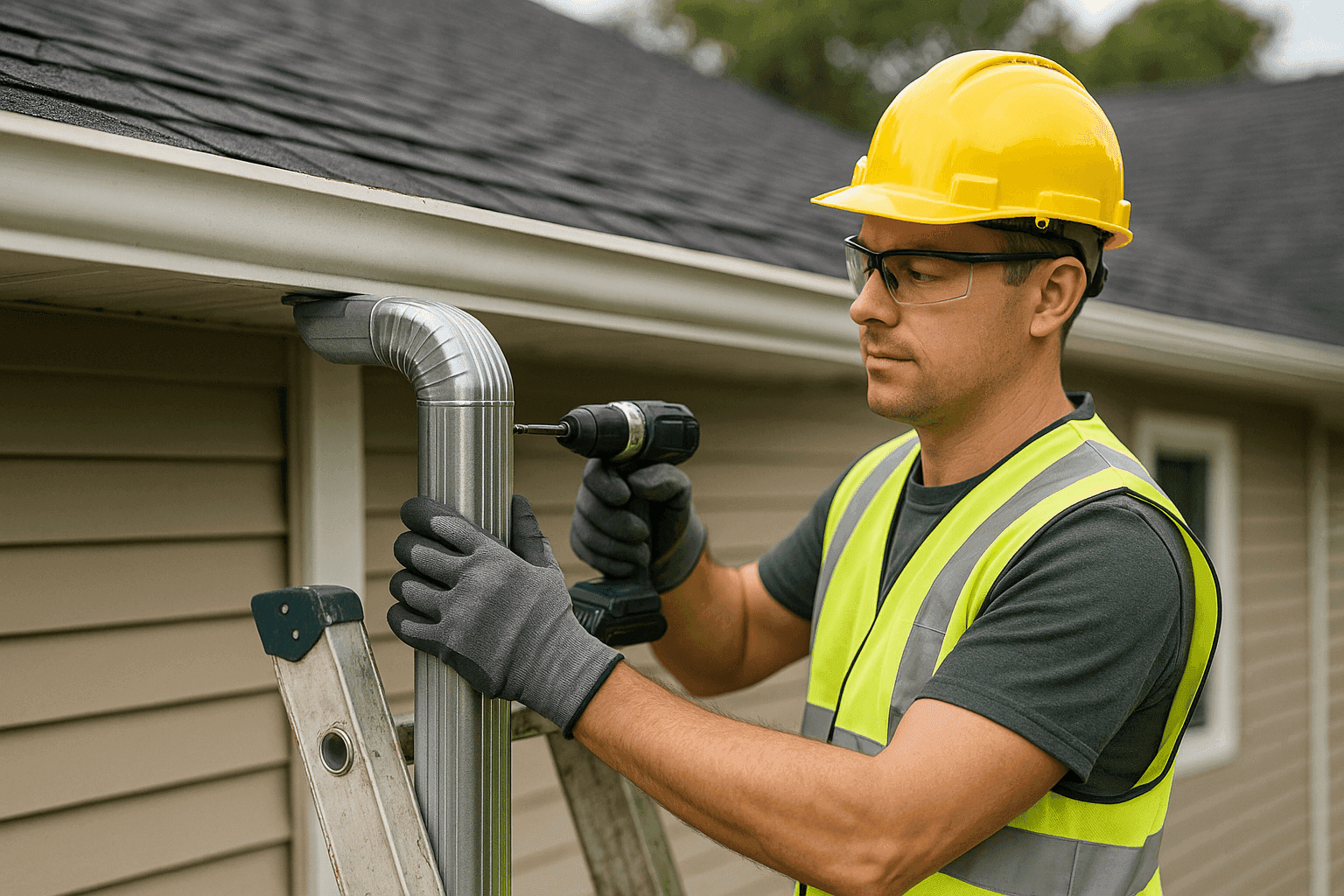
When heavy rain pours, your building’s downspouts face the test. If they’re up for the job, water flows away from your walls and foundation. But if they’re not? Water can seep, rot, and erode. Problems that start small can escalate fast.
At Reston Roofing, we handle emergencies and everyday concerns. Our team knows every aspect of roof drainage—from downspout installation to emergency roofing, gutter repairs, and everything in between. Let’s break down why downspouts matter, how to spot trouble, and what you can do to keep your roof drainage flowing smoothly.
Why Downspouts Matter 🌧️
Think of your downspouts as the exit ramps for rainwater. They carry gallons of water from your gutters down to safe ground. Without these ramps, water piles up on your roof, spills over, and pools near your foundation. The result? Basement leaks, cracked foundations, and ruined landscaping.
The Chain Reaction
- Clogged or misaligned downspouts lead to gutter overflow.
- Overflowing gutters dump water along your siding and foundation.
- Water seeps into crawl spaces, basements, or wall cavities.
- Over time, this weakens structural elements and triggers costly repairs.
Real-World Example:
A commercial building in mid-winter developed ice dams near entrances because downspouts were blocked with debris. Meltwater refroze overnight, causing slip hazards and internal leaks. After a full downspout cleanout and repair, the drainage flowed freely, and safety was restored.
Diagram: How Downspouts Protect Your Building

Signs of Downspout Failure
Spotting a failing downspout early is like catching a leaky faucet before it floods the bathroom. Here’s what to watch for:
- Water marks or streaks on siding below gutters
- Eroded soil or mulch under downspout exits
- Gutters overflowing during rainstorms
- Rust spots, cracks, or visible holes in metal or plastic downspouts
- Downspouts pulling away from the wall
- Water puddling around your foundation or basement windows
Tip:
Check your downspouts after every major storm, especially if you see leaves or debris in your gutters. Early action prevents larger headaches.
Installation Best Practices
Proper installation is more than just attaching a pipe. Done right, downspouts shield your roof, walls, and foundation from the elements.
What Makes Downspout Installation Effective?
- Slope Matters: Downspouts should direct water at least 4–6 feet away from your foundation.
- Secure Mounting: Use brackets spaced no more than every 10 feet, with extra support at joints.
- Correct Sizing: Match downspout size to the roof’s surface area. For heavy rainfall, larger diameters may be needed.
- Splash Blocks or Extensions: Always use these to prevent soil washout at the base.
- Code Compliance: Follow local building codes (such as the International Residential Code, Section R801.3 and R903.4) to ensure safety and performance.
For Commercial Roofs:
Flat roofs often require multiple downspouts or scuppers. These should be sized and installed based on square footage and rainfall intensity. A professional inspection ensures compliance and capacity.
Diagram: Proper Downspout Discharge

Repair and Maintenance Tips 🛠️
Even the best downspouts need attention. Here’s how you can keep them in top shape:
Cleaning
- Remove leaves, twigs, and debris at least twice a year (spring and fall).
- Flush each downspout with a garden hose to check for clogs.
Minor Repairs
- Patch small holes with roofing sealant or aluminum patches.
- Tighten loose brackets and screws.
- Replace any crushed or disconnected sections.
When to Call Reston Roofing
- Downspout sections have separated or collapsed.
- Water damage is visible inside your home or building.
- You notice chronic overflow or rapid rusting.
Pro Tip:
Routine gutter cleaning—alongside downspout checks—prevents 80% of typical drainage issues. Ask about our preventative maintenance services if you need help with hard-to-reach roofs or commercial properties.
Real-World Example: Downspout Rescue
A homeowner in early spring found their basement damp after every rainfall. Our inspection revealed an underground downspout extension had collapsed, forcing water back toward the foundation. We replaced the damaged section and added a surface extension—problem solved, and the basement stayed dry through the next storm.
Building Trust: Reston Roofing’s Approach
We know how stressful water issues can be, especially in an emergency roofing situation. Our technicians carry out detailed inspections, communicate clearly, and never push unnecessary services. Your property’s safety comes first.
When Downspout Issues Become Emergencies
Some downspout problems can’t wait:
- Sudden water pouring into basements or crawl spaces
- Blocked downspouts causing roof leaks during heavy rain
- Detached or collapsed downspouts after a windstorm
For these situations, immediate action is essential. Reston Roofing offers 24/7 emergency roofing and drainage response. We arrive ready to diagnose, stabilize, and restore your drainage system—day or night.
Practical Maintenance Tips for Homeowners & Facility Managers
- Walk around your property after every heavy rain. Look for signs of water pooling or gutter overflow.
- Trim trees and shrubs near your roofline to reduce debris.
- Schedule annual roof and gutter inspections, especially for older properties.
- Use downspout extensions or splash blocks to keep water away from walkways and foundations.
Authoritative Resource:
The National Roofing Contractors Association (NRCA) recommends twice-yearly gutter and downspout checks as part of all roof maintenance programs.
Frequently Asked Questions
How often should downspouts be inspected?
Twice a year is ideal—once in spring and once in fall. After major storms, a quick visual check helps spot trouble early.
Can I install downspout extensions myself?
Yes, many extensions are DIY-friendly. But if your downspouts are buried or you notice water pooling near the foundation, it’s smart to call a professional.
What materials last longest for downspouts?
Aluminum and galvanized steel hold up best in most climates. Vinyl is less expensive, but can become brittle over time.
Are there eco-friendly downspout options?
Absolutely. Consider rain barrels or permeable drainage solutions to collect and reuse rainwater. Ask about eco-friendly options near you.
Local & Seasonal Considerations 🍂
Every region faces unique drainage challenges:
- Heavy Snow Zones: Downspouts must remain clear to prevent ice dams and backflow.
- Tropical Storm Areas: Oversized downspouts and extra anchoring help manage high volumes.
- Urban Commercial Sites: Ensure downspouts discharge into approved storm drains, not onto sidewalks or parking lots.
For all climates, regular maintenance and code-compliant installation are your best protection.
When downspout issues threaten your roof or foundation, Reston Roofing is ready—rain or shine. Don’t let a small problem become a disaster.
Call Reston Roofing now — or reach us anytime at 877-978-3339 .